
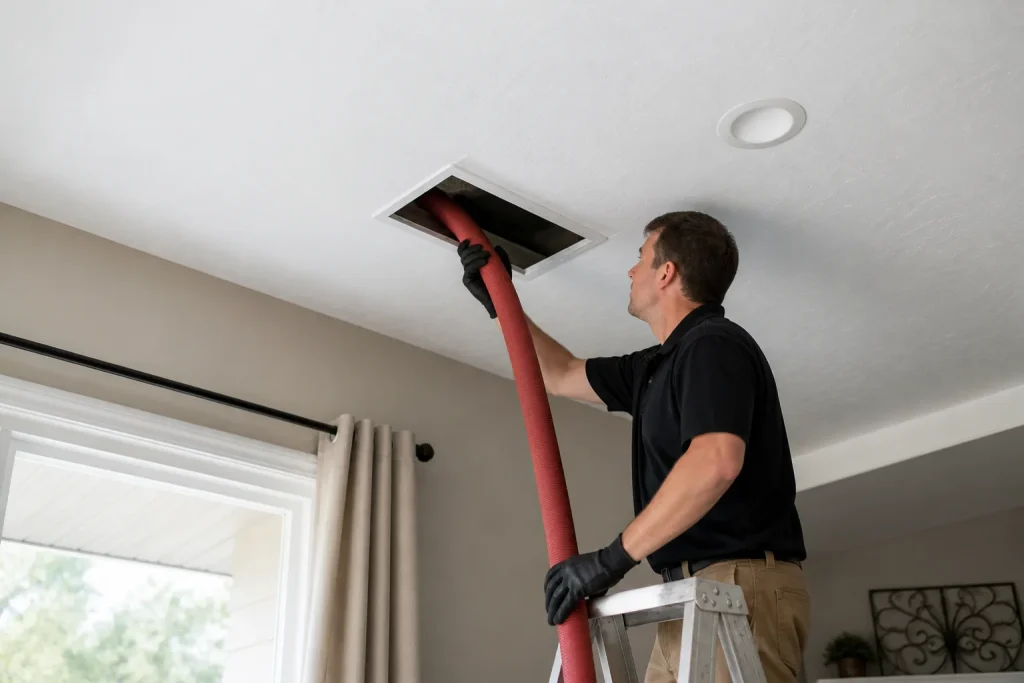
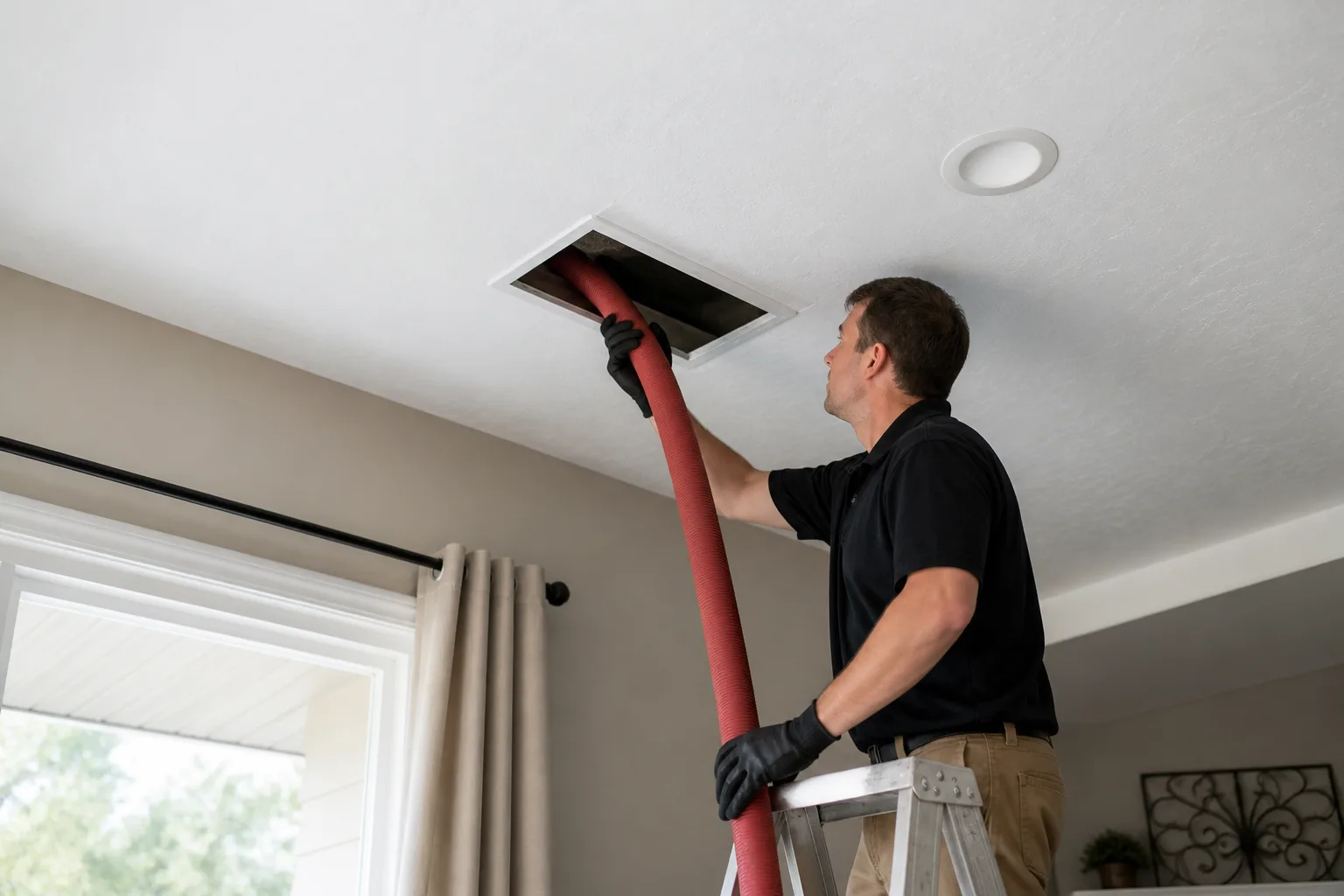
Emergency Air Duct Cleaning Near Me: What West Valley City Homeowners Should Do First
Turning the HVAC back on after a sewage flood, a house fire, or a rodent die-off is the single most damaging thing you can do. Every supply register becomes a delivery nozzle, pushing smoke residue, bacteria, or decomposition odor into every room before anyone arrives with equipment. The first 30 minutes matter more than the cleaning itself. Your job right now is containment, not cleaning. Shut the system down, seal the returns, document what you see, then call. If you’d rather not work through that alone, call (855) 337-1649 and we’ll walk you through it.
What Actually Counts as a Duct Emergency in West Valley City?
A duct emergency is contamination that’s actively spreading or actively hazardous, not dust you can see on a vent cover. Four situations qualify, and each carries a different clock.
Sewage intrusion is the most urgent. When a sewer line backs up into a basement or crawlspace and wicks into flex duct or plenum insulation, you have category 3 water (the industry term for water carrying harmful pathogens) inside the air pathway. Every hour the system runs, that contamination spreads through West Valley City homes with a shared return system.
Fire smoke infiltration is next. Smoke residue is acidic and oily, and it bonds to galvanized steel. The odor doesn’t fade on its own; it re-circulates every time the fan kicks on.
Active mold growth inside the ductwork or on the evaporator coil has to be addressed before the next cooling season. Visible growth on the inside of a return drop is a sign the moisture source hasn’t been fixed either.
Vermin carcasses or heavy droppings sit at the bottom of the emergency list but still need prompt handling. The odor is a signal that something else is wrong: an open return, a disconnected boot, or a gap in the attic duct run. Rodents don’t move into sealed systems.
A dusty vent cover, a mild “old house” smell, or a system that’s never been cleaned isn’t an emergency. That’s a scheduled air duct cleaning job, and waiting a week or two for it costs you nothing but a little comfort.
The Shutdown Protocol: What to Do in the First 30 Minutes
Shut the HVAC system off at the thermostat, then at the breaker. This is the single most important step, and it applies whether the contamination is smoke, sewage, mold, or vermin. A fan that keeps running pulls contaminants deeper into the return trunk and pushes them out through every supply register.
- Kill power to the air handler. Thermostat to OFF, then flip the breaker for the furnace or air handler. Don’t rely on the thermostat alone; some systems run the fan independently.
- Seal the return vents. Blue painter’s tape and plastic sheeting across return grilles stop the cross-contamination path during cleanup. Avoid duct tape on painted ceilings; it takes the paint off. Label each piece of tape with the date so you can show your insurer.
- Close supply registers too. The fan is off, but air still drifts. Closing the dampers reduces migration between rooms.
- Ventilate the affected room, not the whole house. Open windows in the room with the contamination and put a box fan in the window pointing outward. Don’t run a fan blowing inward; you’ll just move the problem.
- Keep people and pets out of the affected zone. If the contaminant is sewage or heavy smoke, this includes anyone with asthma, allergies, or a compromised immune system.
Sewage contamination is a health hazard, not a cleaning chore. If the water is still running, call a plumber first. Duct work happens after the source is stopped. The same goes for an active fire: wait until the fire department has cleared the building before you touch anything.
What to Document Before Anyone Arrives
Photos and notes taken in the first hour often shape the cleaning scope, the estimate, and whether your insurance claim gets approved. Insurance adjusters ask for the same handful of questions every time, and having answers ready moves the process forward by days.
- Photograph the source. The sewage backup point, the smoke-damaged wall, the mold on the return grille, the droppings in the attic. Wide shots first, then close-ups.
- Log HVAC run times. Note the last time the system ran normally and the time you shut it off. If the system kept running for hours after the event, that changes scope.
- Sketch the affected zones. Mark which rooms have visible contamination and which registers are closest to the source. A quick floor plan drawn on a notepad beats a verbal description.
- Keep receipts. Hotel, dehumidifier rental, plastic sheeting, HVAC service call for the shutdown. Small numbers add up on a claim.
- Note the equipment. If the home has a Honeywell or Aprilaire air cleaner or humidifier, note the model. These systems have their own filters and components the cleaning crew needs to inspect and protect.
For homeowners in West Valley City, insurance practices vary by carrier and by the source of the loss. A backed-up sewer line is often treated differently than fire smoke. Read your policy or call your agent, and keep the photos in one folder your adjuster can access quickly.
Why Emergency Response Needs Different Equipment
A standard duct cleaning visit – even with professional-grade Rotobrush and Nikro equipment – is built around agitating and extracting ordinary household dust. An emergency response is built around not spreading contamination in the first place. That’s a different problem, and it needs a different toolset.
The key difference is negative-pressure containment. When the work zone is under negative pressure, air flows into the containment enclosure and out through HEPA filtration instead of leaking into the rest of the house. Abatement Technologies HEPA units are the same category of equipment used in mold and hazardous-material remediation; without them, any cleaning crew you hire is essentially stirring the contaminants around while running a truck-mount vacuum that wasn’t designed for it.
For a sewage or mold job, we also factor in:
- Airmover HEPA filtration in the work zone, running for the duration plus a post-clean clear-out period.
- Sanitizing stage with Guardsman-grade products after the mechanical cleaning and extraction is complete.
- Post-cleaning verification – a visual inspection of the plenum, trunk lines, and register boots against the “before” photos you took.
- Repair and sealing before the system goes back online. A cleaned system with a gap in the attic duct run will re-contaminate inside a month.
We won’t run a standard cleaning visit on a sewage or smoke loss. The scope is different, the containment setup is different, and going cheap on the first pass often means paying twice.
When Cleaning Isn’t Enough: Red Flags for Remediation
Sometimes cleaning is the wrong response and remediation is the right one. A remediation scope handles the source, the contamination, and the repairs in one process; a cleaning scope handles surface contamination only. If any of these red flags are present, you’re looking at remediation, not just cleaning.
- Porous materials were affected. Flex duct, duct board, and any insulation that soaked up sewage or heavy smoke usually have to be removed and replaced. Mechanical cleaning doesn’t sanitize a saturated porous material.
- Mold has spread into wall cavities or the plenum. If the visible growth pattern extends beyond the ductwork, cleaning the ducts alone will let it come back.
- The source isn’t fixed. A leaking roof, a backed-up floor drain, a condensing unit with a failed pan. Cleaning re-contaminated ducts twice is wasted money.
- Odor persists after cleaning. That usually means the contamination reached materials the cleaning pass couldn’t fully reach – plenum lining, insulation, or cured-in-place foam.
- Vermin have compromised the duct run. Chewed flex duct, disconnected boots, or a broken attic takeoff need repair and resealing, which is part of the remediation scope, not the cleaning scope.
This is the part of the job we care most about. We repair what we find – that’s the duct repair and sealing side of the service – and we don’t send a homeowner away with cleaned ducts that are about to leak attic air again in three weeks.
When to call a pro: if the contamination is sewage, smoke, mold, or vermin and the HVAC system has been running since the event, call us. Shut the system down first, then call (855) 337-1649. That’s the point where doing nothing is doing harm.
Related services in West Valley City: HVAC cleaning handles the air handler side of an emergency job once the ducts are under control, and dryer vent cleaning is worth bundling if the loss was a fire, since lint-clogged vents are a common fire path. For the full indoor air pathway, our West Valley City Air Duct Cleaning Pros home page lays out every category.
Water Damage, Smoke, and Utah’s Dry Air
West Valley City sits in a valley with a genuinely dry climate most of the year and a summer monsoon season that can dump an inch of rain in an hour. That pattern matters here because the dry air usually dries out a wet duct run fast enough to hide the problem. A wet flex duct that dries in two days can still have mold spores starting in the paper liner by day three.
Smoke damage behaves differently here than in a humid climate. The dry air lets acidic residue bond and set on galvanized ductwork faster, and the odor becomes harder to remove the longer the system cycles. If a house fire reached the attic or the return system, plan on remediation and not just a standard cleaning visit.
One more local reality: many homes here were built with flex duct in the attic, and the attic gets hot. Damaged insulation or a disconnected run is common. If you’ve had recent pest activity, that’s worth inspecting before we clean.
And yes, we know duct emergencies have a way of happening when the basement smells like a science fair project and the in-laws are arriving in two hours. That’s exactly when the shutdown protocol above matters most, and when the temptation to just “run the fan and air it out” does the most damage.
The Bottom Line
In a real duct emergency, the fastest, cheapest thing you can do is shut the system off and seal the returns. Photograph the contamination, write down what you see, and keep the receipts. Then call someone whose equipment is built for containment, not just agitation and extraction – Rotobrush and Nikro for the cleaning pass, Abatement Technologies HEPA units for the negative-pressure work, and Guardsman-grade products in the finishing stage. Bring in a team that can repair and reseal what it finds so you’re not back here in a month.
If you’re in West Valley City and need help, West Valley City Air Duct Cleaning Pros offers free estimates – one flat price per system agreed before work starts, before-and-after photos of your own ducts, and a written estimate that sets the final price. Call (855) 337-1649. We answer 24/7. Fast dispatch from 7am to 7pm, Sunday through Friday.
Frequently Asked Questions
Can I turn my HVAC back on after a sewage backup or fire? No. Keep the system off at the thermostat and the breaker until the contamination has been cleaned and the ducts have been inspected. Running the fan spreads contaminants through every room and makes the cleaning scope larger. Call (855) 337-1649 before you restart the system – estimates are free.
How fast does a duct emergency need to be handled? Sewage, active fire smoke, and active mold growth should be handled within 24 to 48 hours if the system has been running; vermin carcasses and droppings can usually wait a day or two without getting worse. Shut the HVAC off either way. Call (855) 337-1649 and we’ll help you decide how urgent it is – estimates are free.
Will my insurance cover emergency duct cleaning in West Valley City? It depends on the source of the loss and the specific policy; fire and sudden water losses are more commonly covered than long-term moisture or pest issues. The photos you take in the first hour often make or break the claim. Call your insurer early, then call (855) 337-1649 – estimates are free.
Can a regular duct cleaning crew handle a sewage or smoke job? Not with the same equipment and not with the same containment setup. Sewage and smoke work needs negative-pressure HEPA filtration, not just a truck-mount vacuum. If your cleaning quote doesn’t include containment equipment and a remediation scope, the job isn’t right-sized. Call (855) 337-1649 and we’ll walk through the scope before any work starts – estimates are free.
Written by the team at West Valley City Air Duct Cleaning Pros.
Need Air Duct Cleaning Help?
Call West Valley City Air Duct Cleaning Pros - the local pro we connect you with is licensed and insured, with free written estimates in West Valley City.
(855) 337-1649