
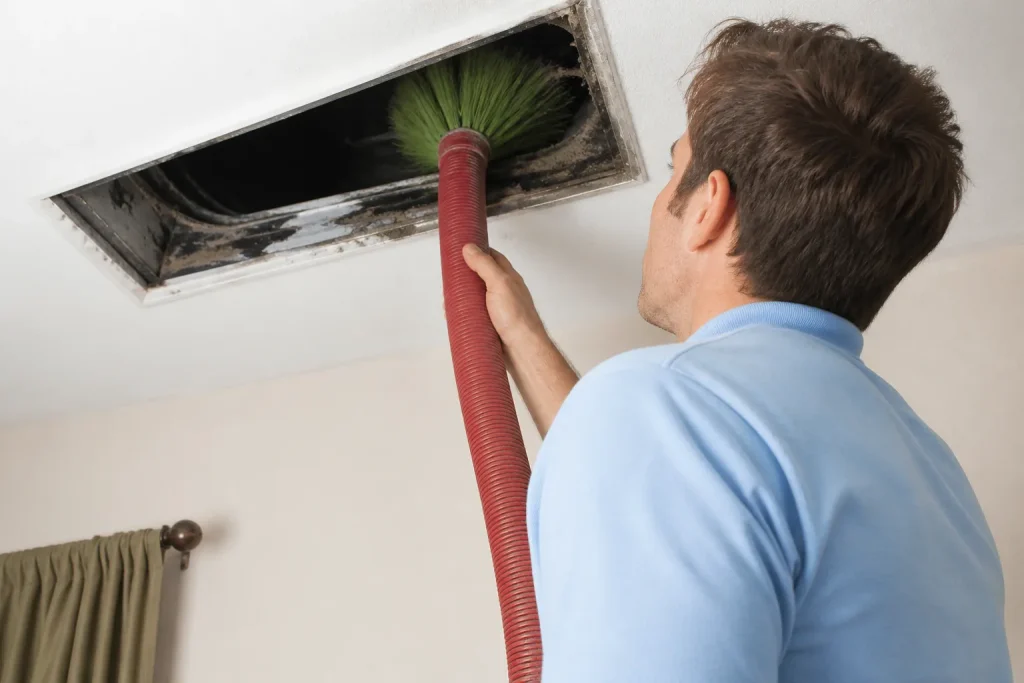
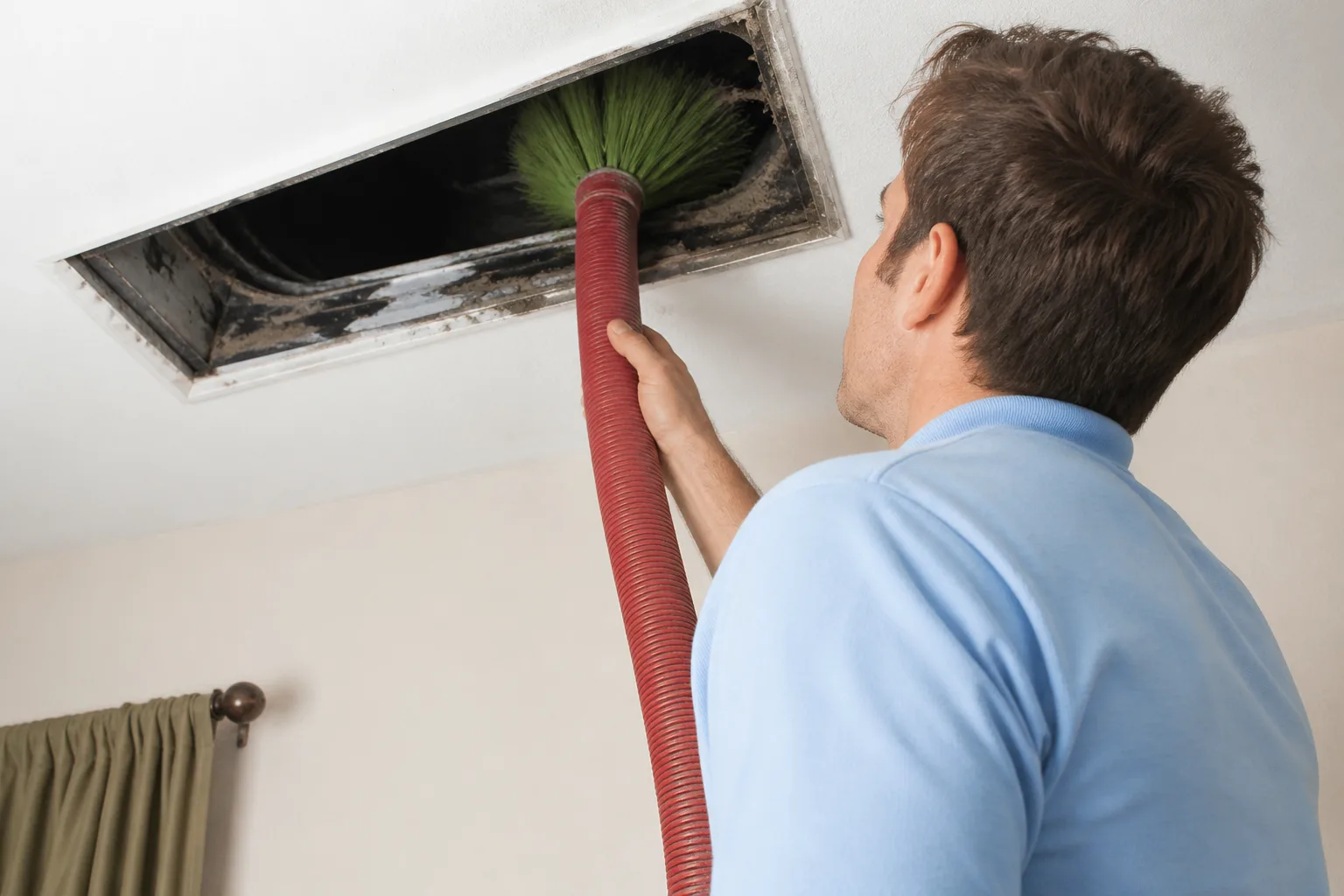
Air Duct Cleaning: Repair or Replace? How West Valley City Homeowners Decide
Here’s the decision in plain terms: clean the ducts when the ductwork is structurally sound but dirty, and repair or replace specific runs when the ductwork itself is failing. The dirt level is not the deciding factor. Duct condition is. Cleaning a flex run with a collapsed section or an open joint doesn’t restore your air quality; it vacuums debris out of a system that’s pulling unfiltered air back in through the gap. Get that order of operations wrong and you’ve paid for a cleaning that undoes itself within weeks. If you’d rather have a trained eye look before you spend, call (855) 337-1649.
Why Does It Matter Whether You Clean or Replace?
Air duct cleaning and duct repair solve completely different problems. Cleaning removes accumulated dust, debris, and biological growth from a system that’s intact and working. Repair and replacement fix the system’s structure. Recommending one when the other is needed is the most expensive mistake in duct maintenance, and it goes both ways. We’ve walked into West Valley City homes where a cleaning was already paid for on a duct system with three disconnected joints and a crushed flex run. The cleaning removed surface debris, and then the system went right back to pulling attic and crawlspace air into the living space. The homeowner paid twice.
It also runs the other way. A homeowner gets a replacement quote for a system that just had heavy dust and a bad filter. That’s a needless four-figure number. The right intervention depends on a condition assessment, not a sales pitch.
Here’s the framework we use. Three questions, in order:
- Is the duct system structurally sound? (Joints connected, boots sealed, no crushed or collapsed sections, liner intact.)
- Is the material still within its service life? (Flex, duct board, and sheet metal each age differently.)
- What does the interior of the duct actually look like? (Surface dust, active growth, or degraded material.)
If question one and two are yes, you clean. If either fails, you repair or replace the affected runs first, then clean.
Which Duct Defects Make Cleaning Pointless or Counterproductive?
Four defects come up again and again in West Valley City homes, and each one makes cleaning a waste of money until it’s fixed. You can identify most of them without opening a wall:
- Disconnected joints. Look in the attic, basement, or crawlspace where duct runs meet fittings. A gap, a duct that’s slipped off its collar, or tape that’s peeled away means the system is drawing unfiltered air. Cleaning won’t stop that leak.
- Collapsed or crushed flex duct. Flex duct kinks easily. A run that’s bent sharply, pinched against a joist, or flattened underfoot loses airflow and traps debris. Straighten or replace it; don’t clean it.
- Improperly sealed boots. Where the duct meets the floor or wall register, a boot that isn’t sealed to the subfloor or drywall leaks air into wall cavities and attic space. That’s a repair, not a cleaning.
- Fiberglass liner deterioration. If the inside of the duct is lined with fiberglass and the liner is frayed, torn, or shedding, cleaning can make it worse by loosening fibers into the airstream. That liner needs replacing.
If you spot any of these, you’re looking at a repair decision, not a cleaning decision. Our air duct cleaning work is built around that check happening first.
How Do You Read a Duct Inspection Report?
A duct inspection report should show you photos, not just a thumbs-up or thumbs-down. The photos tell you what’s actually happening inside the duct, and they fall into three categories that get confused constantly:
Surface oxidation (benign). Sheet metal ducts can develop a light, powdery white or gray film where the galvanized coating is breaking down slightly. It wipes off and doesn’t come back after cleaning. That’s not a replacement trigger.
Active biological growth. Look for dark spotting, fuzzy patches, or a musty smell that returns quickly. If growth is active and recurring, the moisture source needs finding and the affected run usually needs replacing, not just cleaning.
Fiberglass degradation. When a liner sheds or breaks down, the fibers themselves are the contaminant. Cleaning can’t restore a bad liner. That’s a replacement.
Ask the inspector to show you the actual photos of the interior duct walls. A report that says “heavy debris” without pictures is a report you can’t evaluate. And be wary of the reverse: a zero photos, zero conditions “report” that ends in a replacement quote. If you’ve never been through this before, our West Valley City Air Duct Cleaning Pros page walks through the full-system assessment we run.
When Are You Past the Point Where Sealing and Cleaning Make Sense?
Material matters as much as condition. Flex duct, fiberglass duct board, and sheet metal each have a service life, and past a point, sealing and cleaning cost more over time than replacing the run. The thresholds, in general terms:
- Flex duct: When a run is crushed, kinked, or has multiple taped joints that keep failing, replacement is cheaper than fighting it. Flex also stiffens and cracks as it ages.
- Fiberglass duct board: Once the interior foils or the board itself has moisture damage, sealing over it doesn’t fix the problem. Replacement.
- Sheet metal: Sheet metal holds up longest. It’s usually worth sealing and cleaning unless joints are rusted through or the duct is undersized for the system.
West Valley City makes this calculation sharper. The city’s 1970s and 1980s construction boom left a lot of homes with original duct board that’s simply past its service life. And the region’s wide temperature swings stress poorly supported flex runs, so joints loosen and sections sag over time. That doesn’t mean every older West Valley City home needs replacement. It means the material and its condition decide the answer, not the calendar.
Can You Replace Only Part of the System?
Yes, and partial replacement is the most common correct answer. Most systems have a few problem runs and several healthy ones. The goal is a scope that replaces only what’s genuinely failing:
- Replacing only the collapsed or disconnected runs.
- Replacing only the runs with degraded fiberglass liner.
- Sealing boots and joints across the whole system.
- Cleaning the healthy runs and the HVAC unit after the repairs.
A good scope doesn’t replace the whole system unless the whole system is failing. Full replacement is overkill on a system where three of twelve runs are bad. But over-replacing isn’t the only risk; under-scoping leaves a failed run in place and the cleaning doesn’t hold. Ask for a written scope that names which runs get replaced, which get cleaned, and which get sealed. That protects both the air quality and your budget, and nobody walks away with a half-finished system.
This is where full-system scope matters. Our HVAC cleaning and duct repair and sealing are handled by the same trained eye, so the assessment and the work aren’t split between two companies with two scopes. We work with Honeywell and Aprilaire air quality systems, and we repair what we find rather than cleaning around a defect.
When to Call a Pro
Call us when you’ve spotted any of the four defects above, when your inspection report is thin on photos, or when a cleaning quote arrives without a condition check first. Cleaning a system that needs repair is a waste; replacing a system that needs cleaning is worse. In our experience, most West Valley City homes land somewhere in the middle, with a few runs to repair and a full cleaning to follow. That’s a scope we’re glad to put in writing, and a cleaning backed by Rotobrush and Nikro equipment and Abatement Technologies filtration processes gives you a real baseline. If your system also needs a dryer vent cleaned, that’s dryer vent cleaning territory.
The Bottom Line
Cleaning is the right call when the ductwork is structurally sound and inside its service life. Repair or partial replacement is right when joints are disconnected, flex is collapsed, boots aren’t sealed, or fiberglass liner is failing. Read the inspection photos, not just the summary. Get a written scope that names which runs get what. And don’t let a cleaning happen on a system that’s re-contaminating your home through a gap.
If you’re in West Valley City and need help, West Valley City Air Duct Cleaning Pros offers free estimates. Call (855) 337-1649. We answer 24/7. Fast dispatch from 7am to 7pm, Sunday through Friday.
Frequently Asked Questions
Clean when the ductwork is sound and dirty; repair or replace when joints are disconnected, flex is collapsed, boots are unsealed, or fiberglass liner is degrading. Structural condition decides the answer, not dirt level. Call (855) 337-1649 for a free estimate.
Not reliably. If growth is active and recurring, the moisture source needs fixing and the affected run usually needs replacing. Cleaning alone can’t restore a bad liner or a wet duct board. Call (855) 337-1649 for an assessment.
It depends on how many runs are failing, the material, and the scope. Partial replacement of a few runs is far cheaper than full-system replacement. We set the price per job by written estimate, and estimates are free. Call (855) 337-1649.
Yes. A condition check, with photos of the interior duct walls, should come before any cleaning recommendation. Cleaning a system with open joints or collapsed runs undoes itself. Call (855) 337-1649 to schedule.
Written by the team at West Valley City Air Duct Cleaning Pros.
Need Air Duct Cleaning Help?
Call West Valley City Air Duct Cleaning Pros - the local pro we connect you with is licensed and insured, with free written estimates in West Valley City.
(855) 337-1649