
How to Choose the Right Air Duct Cleaning Company in West Valley City
Most homeowners vet duct cleaners with reviews and price. The two things that actually decide whether the job works get skipped: the class of equipment the company runs and whether they clean the whole air pathway or just the reachable trunk lines. A $99 special usually means a portable vacuum with nowhere near enough airflow to carry debris out of the system, so it stirs dust loose and leaves it to settle right back into the rooms you breathe in. If you’d rather have someone walk you through it, call (855) 337-1649.
Here’s the short answer before the detail: choose a company in West Valley City that runs professional-grade extraction equipment, practices source removal, holds a recognized process certification, and cleans the full system including the air handler. Everything else is secondary.
Why Do Cheap Duct Cleaning Specials Go Wrong?
They go wrong because the equipment can’t move enough air. Debris in a duct system has to be lifted, agitated, and then carried out on an airstream. That takes airflow measured in cubic feet per minute (CFM), and residential-grade portables come up well short of what a real extraction job needs.
When a portable vacuum with weak CFM agitates a duct, the dust gets airborne inside the system but never gets captured. It redistributes. In distribution terms, the ducts can end up dirtier than when the truck pulled up.
- Portable shop-style vacuums: low CFM, fine for surface dust near a vent, not built to pull settled debris from long runs.
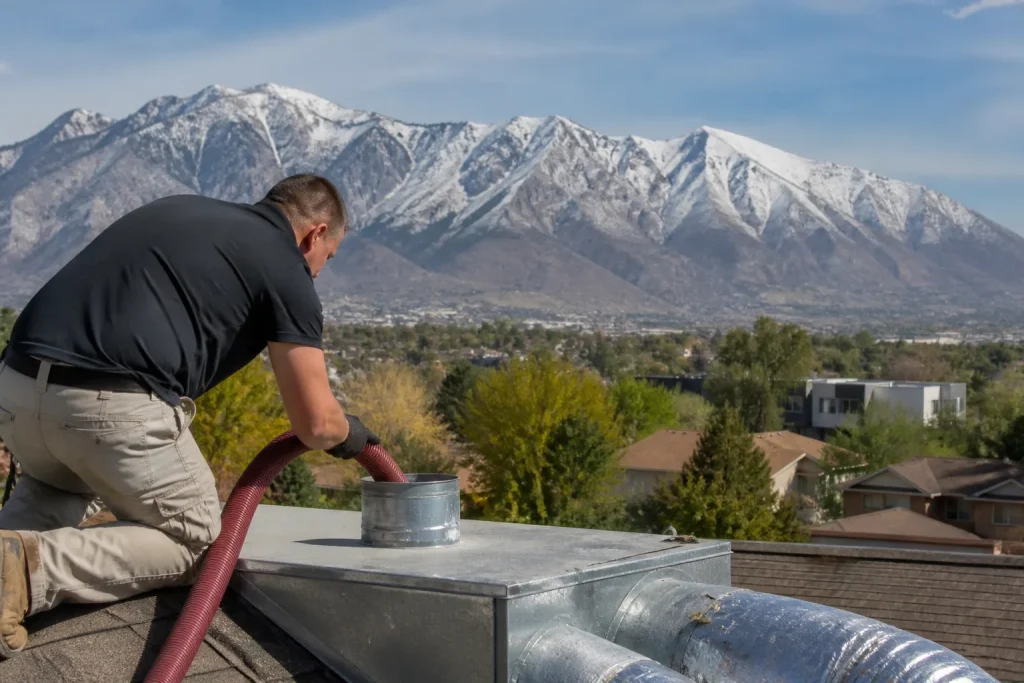
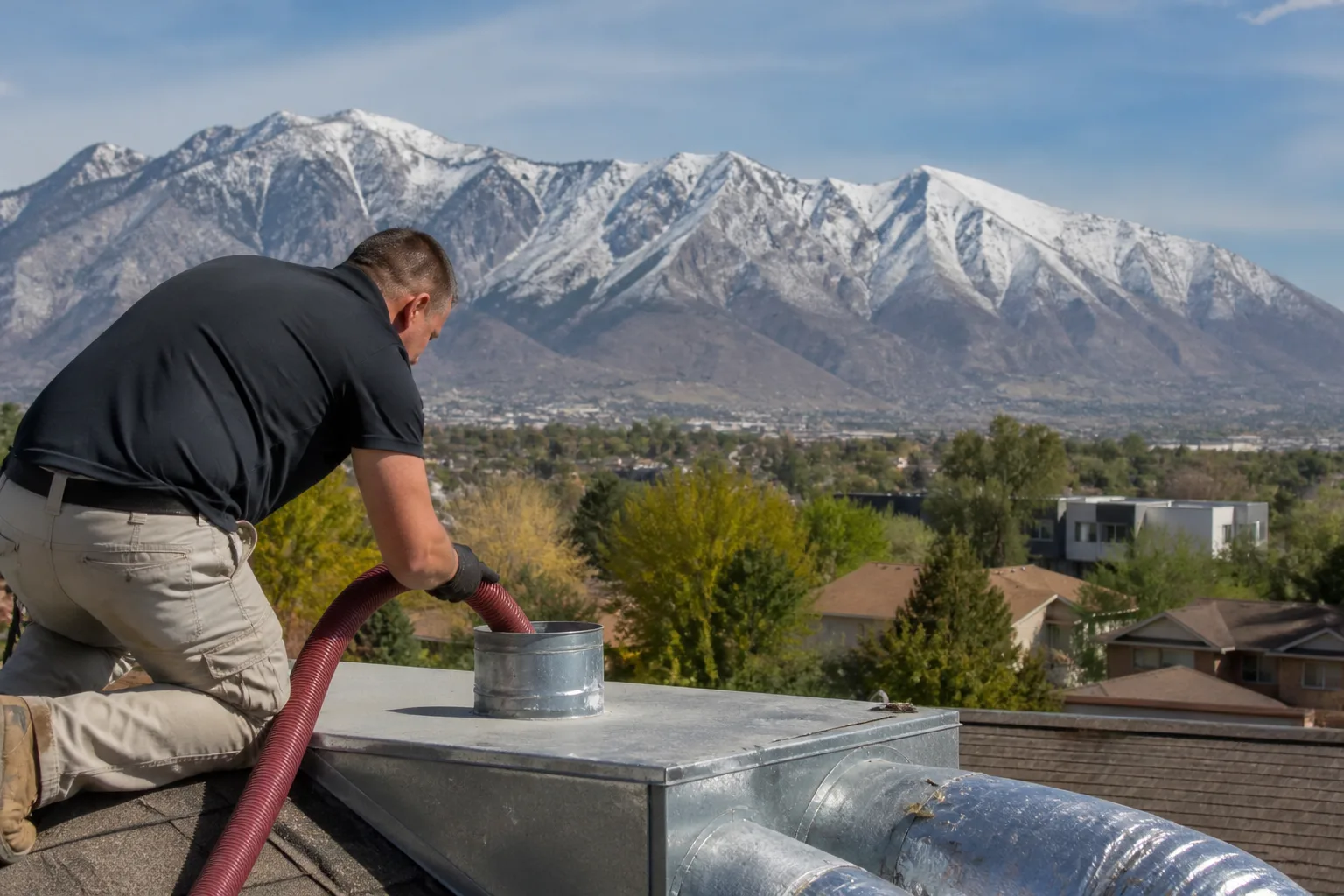
- Truck-mount and trailer-mount systems: high CFM with a sealed connection to the duct system, which creates the negative pressure that actually extracts material.
- Negative air machines: HEPA-filtered units that keep the work area under pressure so loosened debris travels toward the filter, not into your living room.
This is the single most useful question you can ask: what is the airflow capacity of the equipment, and is it connected to the system or just held near a register? If the answer is vague, you’ve learned something. Our technicians use Rotobrush and Nikro systems built for this exact purpose, and we’re happy to explain the setup before we touch anything in a West Valley City home.
What Is Source Removal, and Why Should You Ask About It?
Source removal is the standard method for a real duct cleaning. It means the debris is mechanically agitated with rotating brushes and whips, then extracted out of the system under negative pressure, so the contaminants leave the building. Contact vacuuming is different: it cleans what the nozzle can reach through a vent opening. That’s a surface clean, not a system clean.
Ask the company outright which method they practice. A company that does source removal will answer without hesitation and describe the brush-and-extraction process. A company that only contact vacuums will usually talk around the question.
The mechanics matter. Brushes of different diameters reach different parts of the duct. Flexible whips handle bends and transitions. The extraction pulls the loosened material out through a HEPA-filtered line. Skip one step and you’ve either left debris behind or pushed it somewhere worse. In our experience, the difference between a source-removal job and a quick contact vacuum shows up within a season, when the dust settles back and someone calls us wondering why the last cleaning didn’t hold.
What Does NADCA ACR Certification Actually Require?
A NADCA ACR certification is a process standard, not just a dues-paying membership. It certifies that the technician has been trained and tested on the accepted way to perform an air duct cleaning: source removal methodology, containment, protection of the HVAC components, and proper documentation of what was found and done.
That training means the technician should arrive knowing:
- How to establish containment so loosened debris can’t escape into the home.
- How to protect the furnace, coil, and blower from dust and physical damage during cleaning.
- How to use agitation tools and extraction in the right sequence, not just at the same time.
- How to document conditions with photos of the ducts before and after the work.
When you’re comparing quotes in West Valley City, ask whether the technician performing the work holds that certification or is trained under that standard. A company that operates to it will have no trouble answering. It’s one of the sharpest filters you have for telling a specialist from a generalist with a vacuum.
What Equipment Questions Should You Ask Before Booking?
Ask these four questions and listen to the answers. The way a company replies tells you more than any online review. A crew that does this work daily answers in specifics. A crew that doesn’t gets vague fast.
- Do you use HEPA-filtered negative air machines? These keep the work area under controlled pressure and capture fine particulate down to a filtered level. If the answer is no, the debris has somewhere else to go.
- What brush diameters do you carry? Trunk lines, branch runs, and transitions need different tool sizes. A single brush means part of the system goes untouched.
- Do you clean the air handler and coil, or only the duct runs? A system clean includes the components that move the air. Cleaning ducts alone leaves the dirtiest part behind.
- Do you inspect the ductwork before cleaning it? Older homes and DIY-installed systems can have flex duct that’s collapsed, torn, or poorly connected. Aggressive cleaning on ductwork that’s already failing makes it worse.
If a company can’t tell you the brush sizes they carry, that’s your answer. On a related note, if you want a sense of what a full-system visit looks like, our page on air duct cleaning walks through the scope step by step.
Why Does the Local Environment Change the Job in West Valley City?
Because the dust load here isn’t the same as a humid climate, and the housing stock isn’t either. West Valley City sits in a high-desert valley where fine dust moves on the wind through dry months and settles into return-air grilles month after month. That dust load means systems here fill up faster than systems in wetter parts of the country.
The housing side is the second factor. Some of the older housing stock in West Valley City was built with flex duct, and flex duct is more fragile than rigid metal. It tears, it sags, and it can collapse at a bend. On top of that, some of what’s in these homes was installed by a previous owner as a DIY project, which means connections that were never sealed and runs that don’t follow a clean path. In our experience around West Valley City, that combination is where a cleaning job can go sideways: aggressive cleaning on ductwork that has a disconnected joint pushes dust into a wall cavity instead of into the extraction line.
A careful company inspects first. Our approach includes looking for damaged or unsealed sections before cleaning starts, and our duct repair and sealing capability means we can fix what we find rather than leave a system that won’t hold. If the ducts are coming apart at the seams, cleaning them and walking away is a wasted visit. Our HVAC cleaning work follows the same principle: the whole air pathway gets checked, not just the visible parts.
When Should You Call a Pro Instead of Handling It?
Call a professional if the ductwork is older flex, if you’ve never had the system cleaned, or if anyone in the house has allergies or breathing concerns. The equipment needed to do this properly, from the extraction system to the HEPA negative air machines, isn’t something a homeowner can replicate with a rented shop vac and an afternoon.
There’s also the finishing stage to consider. Products like Guardsman used in sanitizing and protecting the system are applied by trained hands, and they’re part of a process that includes cleaning the air handler and coil, checking for leaks, and confirming the ducts are sealed. A partial job on a system with a known gap at a joint is just moving dust around.
If you’re already thinking about the whole air pathway, our dryer vent cleaning service is a natural companion. Lint buildup in a dryer vent is a separate fire concern from duct dust, and it’s the kind of thing many homeowners don’t think about until a dryer starts taking two cycles to dry a load.
The Bottom Line
Choosing a duct cleaning company isn’t about picking the lowest bid or counting the reviews. It’s about four things: high-CFM extraction equipment, source removal methodology, a certified process, and full-system scope that includes the air handler and coil. Ask the four equipment questions. Ask about the method. Ask for photos of your own ducts before and after. That’s the vetting that actually protects you here in West Valley City, where the dust load is real and the older flex duct is real. For a full view of who we are and the services we provide, see West Valley City Air Duct Cleaning Pros.
Related services in West Valley City: air duct cleaning, dryer vent cleaning, and HVAC cleaning as a full-system package.
If you’re in West Valley City and need help, West Valley City Air Duct Cleaning Pros offers free estimates. Call (855) 337-1649. We answer 24/7. Fast dispatch from 7am to 7pm, Sunday through Friday. One flat price per system agreed before work starts, before-and-after photos of your own ducts, and technicians with up to 9 years of experience.
Frequently Asked Questions
Choose based on equipment and method, not price. Ask what CFM airflow their extraction system produces, whether they practice source removal, whether they use HEPA-filtered negative air machines, and whether they clean the air handler and coil along with the ducts. A company that answers all four in specifics is the one to book.
Source removal agitates debris with rotating brushes and whips and extracts it from the system under negative pressure, so the contaminants actually leave the building. Contact vacuuming only cleans what a nozzle can reach through a vent opening. Source removal is the standard method; contact vacuuming is a surface clean.
Low quotes usually reflect low equipment. A portable vacuum with insufficient CFM can’t pull settled debris out of the runs, so the work is a surface pass rather than a system clean. Ask what equipment they bring and whether it seals to the duct system. Call (855) 337-1649 for an exact quote, and estimates are free.
There’s no universal schedule. The dry, dusty conditions here and the older flex duct common in some West Valley City housing tend to mean systems need attention sooner than in wetter climates. Inspect first, clean when the buildup and the ductwork condition call for it, and seal what’s leaking so the cleaned system stays clean longer.
Written by the team at West Valley City Air Duct Cleaning Pros.
Need Air Duct Cleaning Help?
Call West Valley City Air Duct Cleaning Pros - the local pro we connect you with is licensed and insured, with free written estimates in West Valley City.
(855) 337-1649